

That spot by the window is freezing, but the rest of the living room feels fine. Do you need new windows, a tube of caulk, or just a different place for the reading chair? Hold the credit cahd. Start by figuring out which problem you actually have.
Cost: $0 to inspect; repair costs depend on the cause
Your practical checklist.
- Close and lock the window normally. Never force a damaged latch.
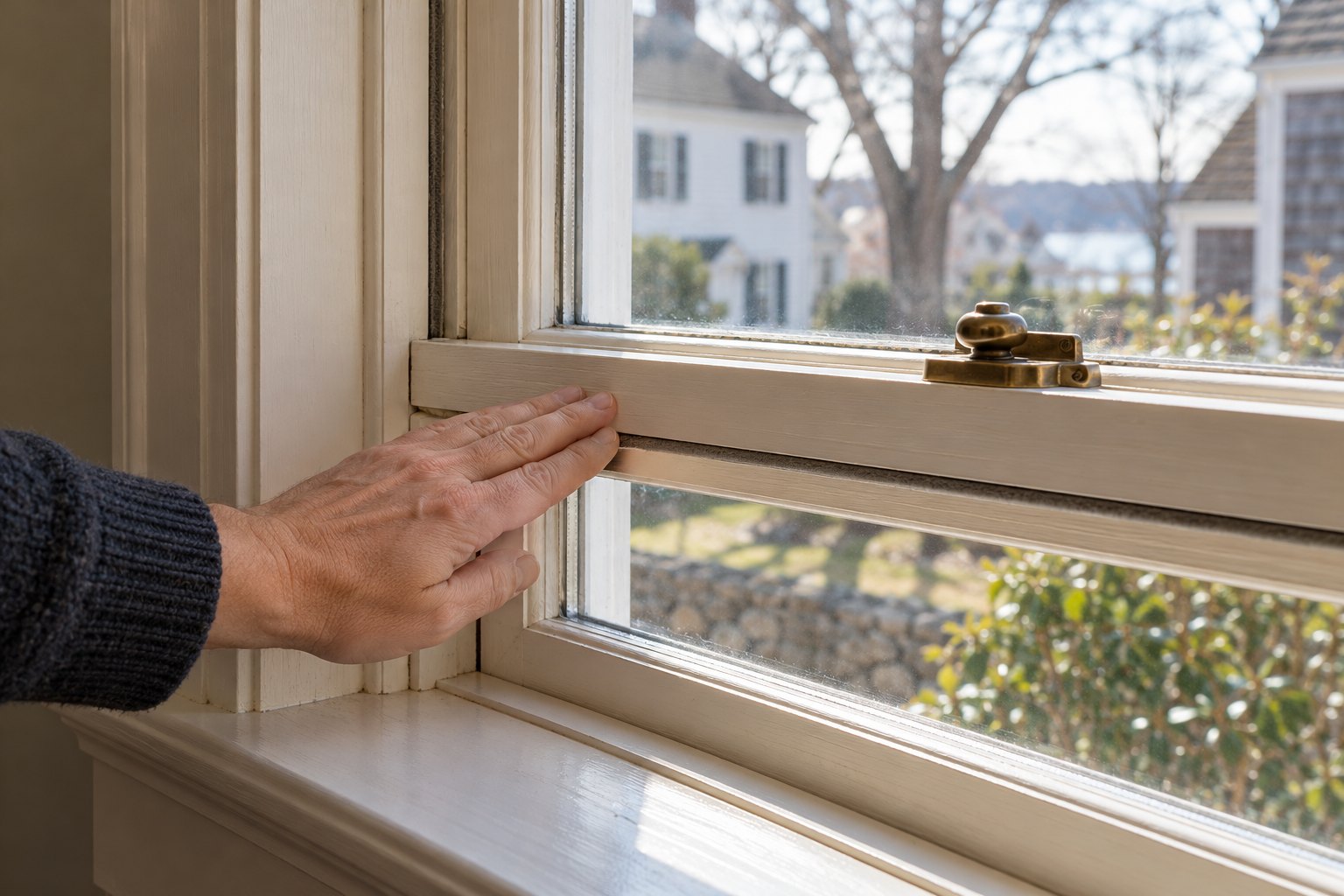
- On a cool, breezy day, use your hand to note moving air at the sash and frame. Do not use a flame.
- Write down the location, weather and any water stains or damaged material.
- Choose a reversible comfort measure or ask a qualified professional about the specific defect.
A draft and a cold surface are different problems.
A window can feel uncomfortable without an obvious hole. Cold glass exchanges heat with the room, and air next to it can cool and move downward. An actual draft is air moving through a gap. Both can make the same chair feel like the cheap seats at an outdoor hockey game.
Your hand is a useful observation tool, not a leak meter. If the cause is unclear, a professional energy assessment can check the building more systematically. A cold spot alone is not proof that replacement windows are the best investment.
Check the easy things before shopping.
Look at the window while it is closed. Is the sash seated? Does the lock engage normally? Is visible weatherstripping missing, loose or damaged? Photograph the exact spot rather than ordering a generic fix for every window. Renters should send those observations to the property manager before making alterations.
Do not cover window drainage openings, required ventilation or emergency escape openings. Leave damaged frames, recurring water intrusion and suspected hidden moisture to someone qualified to diagnose them. Air sealing near fuel-burning equipment also needs appropriate combustion-safety consideration.
Use the sun and shades for comfort, with limits.
Open shades on sunny south-facing windows during winter daylight, then close them at night. Keep curtains clear of radiators and heating vents. These are the window and airflow habits Mass Save recommends.
Try one room first and note the time of day and weather. If the room still feels cold, record that result. Buying heavier curtains repeatedly is no substitute for fixing a damaged window or understanding heat loss elsewhere in the house.
What should you do with your notes?
If you found a clearly damaged seal or latch, ask for a repair recommendation tied to that location. If several rooms are uncomfortable, request a whole-home assessment before treating each window as an isolated project.
Ask the assessor: Is this air leakage, missing insulation, a heating-distribution issue, or a cold-surface comfort problem? What evidence supports the first repair? That conversation is more useful than being sold a houseful of windows because October got personal.
A useful window-repair question sounds like this.
Instead of asking “How much for new windows?”, try: “The lower sash in this bedroom feels breezy on windy evenings. The latch is loose, and I have a photo of the joint. Can you check the sash fit and weatherstripping, and tell me whether a repair would address that specific symptom?” That gives the person helping you a defined problem.
If the reply is a replacement quote, ask what inspection led to that recommendation and what alternatives were considered. Separate a repair that restores function from an upgrade intended to improve comfort or energy performance. You may decide to replace a window; the point is to understand the reason before committing.
Common questions.
Will closing curtains fix a window draft?
Curtains can reduce cold-window discomfort, but they do not repair missing weatherstripping, a damaged frame or an air leak.
Should I seal every hole around a window?
No. Preserve drainage paths, required ventilation and emergency exits. Ask a professional about uncertain gaps or moisture damage.
Can a renter use this checklist?
Yes. Observe, document and ask the landlord about repairs. Get permission before adding adhesive films, caulk or permanent hardware.
Sources and fact checks.
Published by The Heatah team. Guidance is linked below; no professional inspection of your home is implied.
- Mass Save: Heating and Cooling Tips · checked 2026-10-28
- U.S. Department of Energy: Consumer Guide to Air Sealing · checked 2026-10-28
- DOE: Energy-Efficient Window Performance and Selection (cold glass, convection and drafts) · checked 2026-10-28
Original editorial illustrations created for The Log. These images do not depict a customer property, an actual inspection or a measured result.