
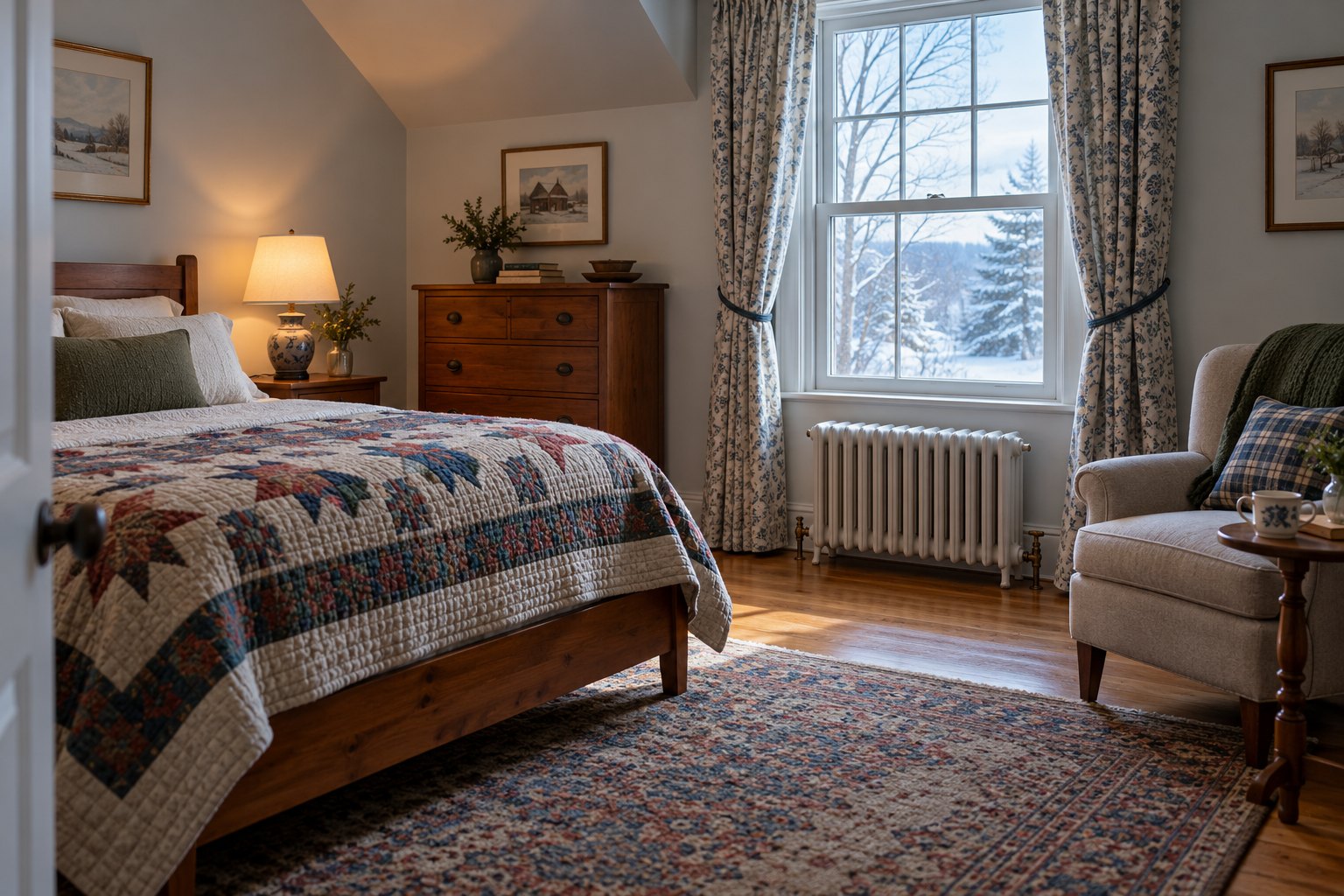
The kitchen is toasty. The spare room feels like the visitor’s bench at the rink. Turning up the whole house might warm both, but it does not explain why one room is lagging behind. Take fifteen minutes to follow the heat before negotiating with the thermostat again.
Cost: $0 for observation and moving safe obstructions
Your practical checklist.
- Identify whether the room uses a radiator, baseboard, forced-air supply or ductless head.
- Move safe furniture obstructions; keep manufacturer-required heater clearances.
- Observe drafts, doors, sunlight and temperature at a consistent occupied location.
- Send a concise symptom log to a qualified professional if the imbalance persists.
First ask: how is this room supposed to get heat?
A supply register, a return grille, a hot-water baseboard and a steam radiator have different jobs. Identify what is actually installed before moving controls. A grille that does not blow warm air may be a return, not a broken supply.
For a rental, start with photographs and a question to the property manager. For your own house, look for the system manual or a service record. Do not take off covers or open electrical equipment to answer a question that a photo can settle.
Clear the path, not the whole weekend.
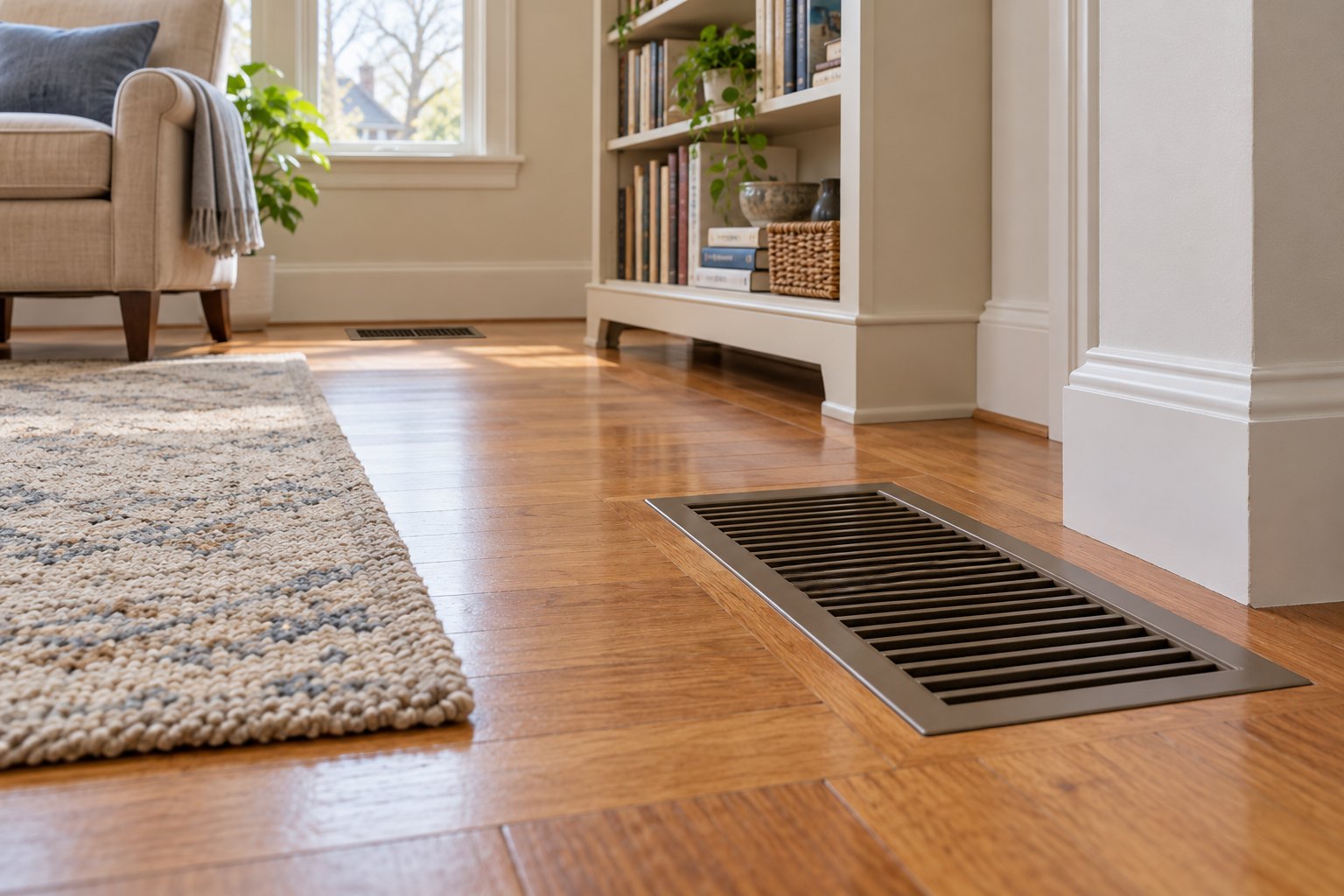
Mass Save recommends keeping furniture and draperies away from radiators and heating vents. Give existing heat a route into the room while respecting the equipment’s required clearances. Do not let fabric rest on a heater.
Check that a return grille is not hidden behind a bookcase. Do not try to balance a forced-air system by shutting random supply vents, covering returns or blocking door paths. Distribution adjustments belong to a system-specific plan, especially where other rooms, equipment airflow and pressure interact.
Make a small symptom log.
Record the room, time, outdoor conditions, thermostat setting and whether the door is normally open or closed. Take a temperature reading in the occupied area, away from a sunny window or heater discharge. Note how the next room feels under the same conditions.
Observe visible window damage or moving air without using a candle or incense. If a room warms in afternoon sunlight but cools rapidly later, write that down too. These observations narrow the service conversation; they do not establish a measured rate of heat loss.
Know when to stop rearranging things.
If you have cleared obvious obstructions and the imbalance continues, ask a qualified heating professional about distribution and controls, and an energy assessor about the building envelope. Avoid adding equipment until someone can explain whether the room lacks delivered heat or loses too much of it.
Ask for the finding in writing: what was checked, what is the proposed fix, and how will improvement be evaluated? A recurring fault, leaking equipment, burning smell or safety alarm is a reason to follow the relevant emergency or service guidance immediately, not continue this checklist.
Compare two rooms under similar conditions.
Pick the uncomfortable room and one room that feels normal. Note both temperatures around the same time, using the same thermometer location rules. Record whether sunlight, an open door or another heat source changes the comparison. You are building a description of the problem, not conducting a laboratory test or proving the house needs a particular product.
A useful handoff might read: “The back bedroom stays noticeably cooler than the hallway on cloudy mornings. The radiator is clear, the door is normally open, and the difference persists.” Ask the professional which delivery and building-envelope checks make sense next. That is more actionable than “upstairs is freezing,” even if the latter feels wicked accurate.
Common questions.
Should I turn up the whole-house thermostat for one cold room?
That may warm other rooms unnecessarily without identifying the cause. Check heat delivery and obvious obstructions, then seek diagnosis if the difference persists.
Can I close vents in warmer rooms to force heat into a cold room?
Do not use random vent closures as a balancing strategy. Ask a qualified professional about the airflow and distribution requirements of your system.
Will curtains fix every cold room?
No. A room can have distribution, control, insulation or air-leakage problems. Curtains address only part of some window-related discomfort.
Sources and fact checks.
Published by The Heatah team. Guidance is linked below; no professional inspection of your home is implied.
- Mass Save: Heating and Cooling Tips · checked 2026-10-28
- ENERGY STAR: Duct Sealing and distribution · checked 2026-10-28
Original editorial illustrations created for The Log. These images do not depict a customer property, an actual inspection or a measured result.