
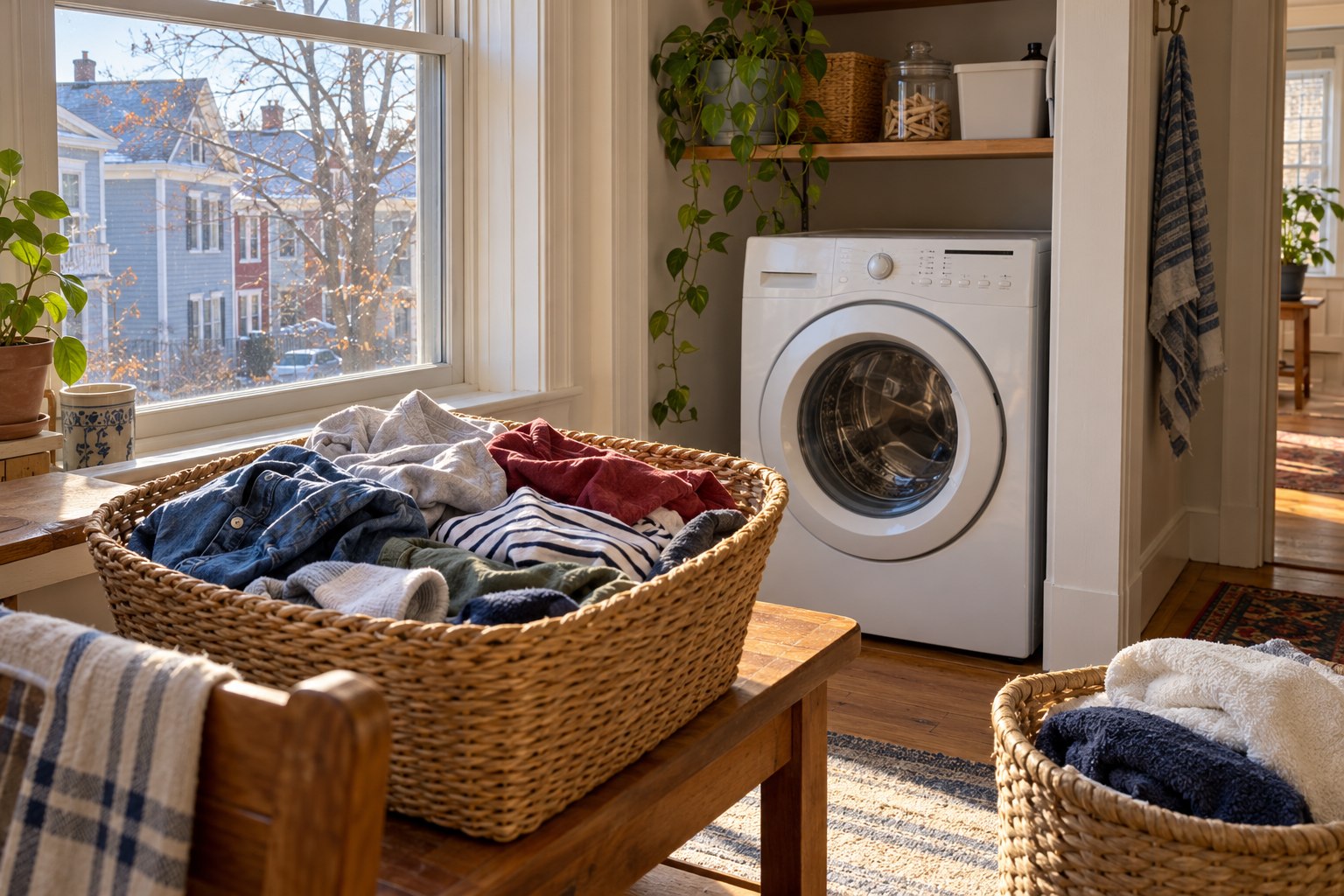
A Providence triple-decker, a basket of school shirts, and enough socks to outfit the whole block—except none of them match. Winter laundry is already a project. Heating every wash by habit can add another energy demand, but “cold for absolutely everything” is not a sensible rule either. Start with the load in front of you, then give the dryer a fair chance to finish it once.
Cost: $0 using existing machine settings and supplies
Your practical checklist.
- Read care labels and separate ordinary washable clothes from special-care, heavily soiled or contaminated items.
- Check the detergent and washer instructions; choose a suitable cold cycle where allowed and measure the recommended detergent amount.
- Build a properly sized load with room for the machine to work; full does not mean packed tight.
- Choose an appropriate spin setting for the fabrics, then separate heavier items from lighter clothes for drying.
- Follow the dryer manual, clean its user-accessible lint filter as instructed and use a suitable automatic cycle; investigate repeated abnormal drying times.
Start with the shirt label, not the weather forecast.
ENERGY STAR says cold washing generally cleans ordinary laundry well, with oily stains an important exception. Heating wash water uses energy, so choosing a cooler suitable cycle is a practical place to start. That is a reason to check the setting—not a promise that every household will save the same amount or that every stain will disappear.
Read the care label, detergent directions and your model’s instructions together. A winter coat, wool sweater and everyday cotton T-shirt do not automatically belong in one load. If the manual distinguishes “tap cold” from a controlled cold setting, follow its explanation rather than assuming those names mean the same thing. You do not need to alter hoses, plumbing or the water-heater temperature to try an ordinary user setting.
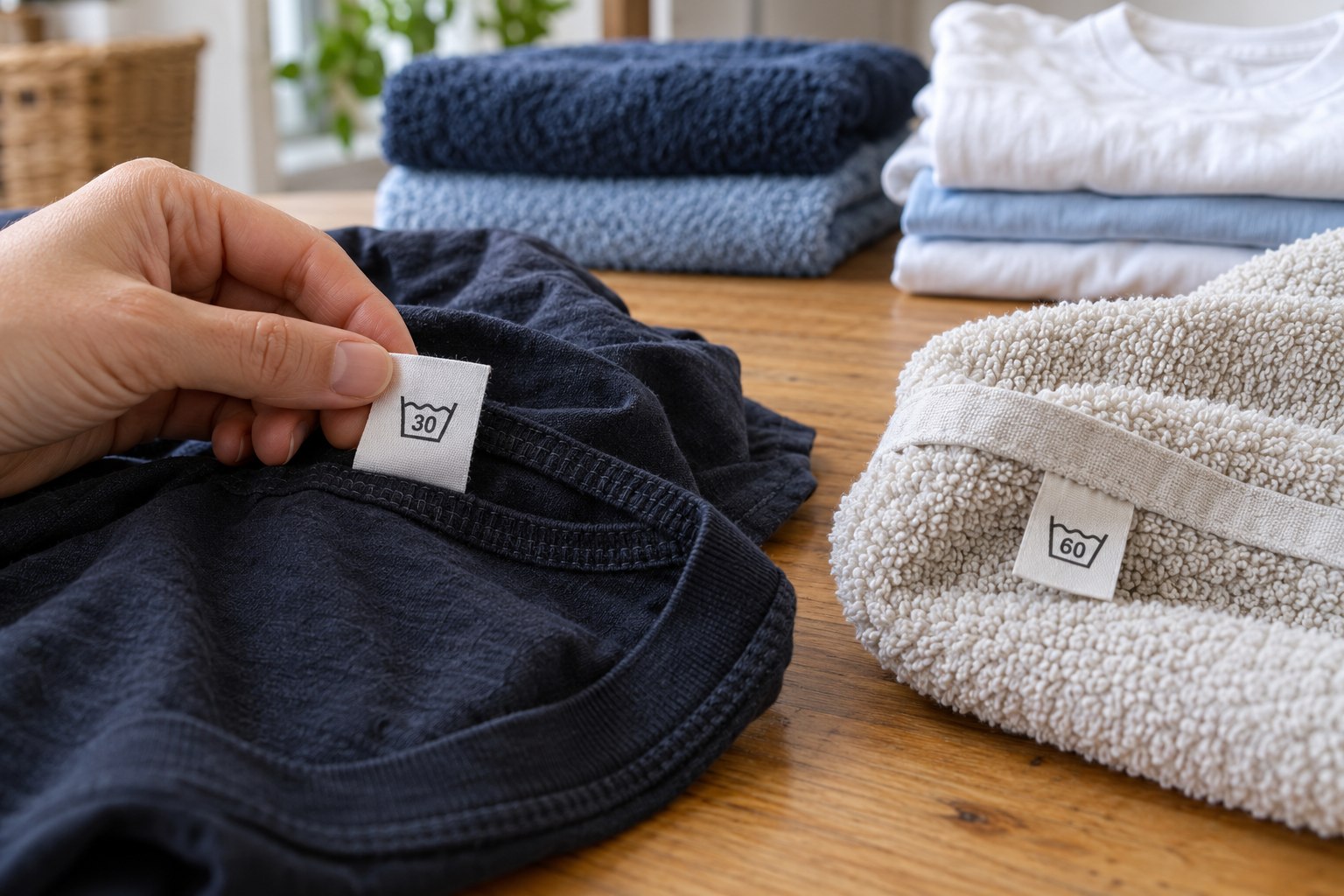
Use a small, ordinary load as your starting comparison.
Choose items you already know are washable and suitable for the same cycle. Note the program, temperature choice, detergent amount and result. If the load comes out with residue or a stain remains, record that specific problem before adding another rinse or escalating every future load to hot. Check the product’s stain-treatment instructions; more detergent is not automatically a better wash.
EPA WaterSense recommends appropriate detergent dosing to avoid extra rinsing and running full loads where possible. Respect the washer’s loading directions: stuffing in the last towel to avoid another load can make the process less useful. In a shared laundry room, use the posted machine instructions and report problems to the operator instead of changing equipment connections or maintenance settings.
Give towels and lightweight shirts different drying plans.
DOE’s Energy Saver guide recommends drying heavier cottons separately from lightweight clothing. It also describes using an appropriate high or extended spin to remove more water before drying. Fabric care still governs: choose that option only when the garment and washer instructions permit it. A delicate item does not become sturdier because the energy bill arrived.
For machine-dryable clothes, use the suitable automatic or moisture-sensing program described in the dryer manual rather than routinely adding a long timed cycle. DOE explains that moisture sensors can stop drying when the load is ready. Check the result without deliberately leaving laundry damp for storage. The goal is completely dry items without unnecessary extra running, not a universal number of minutes.
Keep the exceptions out of the bargain bin.
Cold washing is an energy habit, not a disinfection claim. CDC’s household laundry guidance calls for detergent, the recommended water temperature and complete drying. Follow any specific care or health guidance that applies to your household, including illness-related instructions; do not substitute this article for those directions. Use a sanitizing program only for an actual need and according to the machine and fabric instructions.
Items exposed to flammable substances are outside this ordinary-laundry checklist. Follow the product warnings and appropriate professional guidance rather than putting questionable items into a dryer. Likewise, a burning smell, equipment fault or abnormal heat is a safety issue, not a prompt to experiment with another cycle. Stop using faulty equipment and obtain qualified help.
If drying takes two rounds, ask what changed.
NFPA advises cleaning the lint filter before or after each load and having dryers installed and serviced professionally. Follow the model’s user-maintenance instructions. If normal loads suddenly take much longer, report the change and arrange qualified service for the dryer and, where applicable, its exhaust. Do not disconnect or redirect a vent into the house to “save” the heat.
Keep a useful note: “Similar towels, same program, now still damp after the usual cycle; lint filter maintained.” Include the model and when the problem started. Air-drying may suit some garments, but a damp room needs moisture management too; use our condensation guide if windows get wet. This week, aim for a repeatable wash-day routine. The sock-pairing mystery can remain wicked unsolved.
Common questions.
Does cold washing work for every stain?
No. Oily stains and other difficult soil may need different treatment. Follow the garment, detergent and washer instructions rather than assuming one temperature solves everything.
Should I use extra detergent for a cold wash?
Use the amount recommended for your detergent, machine, load and soil. Extra detergent can create rinsing problems; cold water is not a reason to ignore dosing instructions.
Is cold washing a sanitizing process?
This guide makes no sanitizing claim. Follow recommended temperatures, complete drying and any specific health or care guidance that applies to the items or household.
Can I keep dryer exhaust indoors to warm the house?
Do not redirect a vented dryer’s exhaust indoors. Keep the installation as designed, follow its instructions and ask a qualified professional about ventilation or performance problems.
Sources and fact checks.
Published by The Heatah team. Guidance is linked below; no professional inspection of your home is implied.
- ENERGY STAR: Clothes washer cold-water, load and spin guidance · checked 2026-10-30
- EPA WaterSense: Clothes washer detergent dosing and full-load habits · checked 2026-10-30
- DOE: Energy Saver Guide, clothes washers and dryers · checked 2026-10-30
- CDC: Household laundry care, detergent, temperature and complete drying · checked 2026-10-30
- DOE-hosted NFPA: Clothes dryer and washing machine safety · checked 2026-10-30
Original photographic-style editorial illustrations generated for The Log. These pictures do not document an actual customer home, laundry test or measured energy result.