
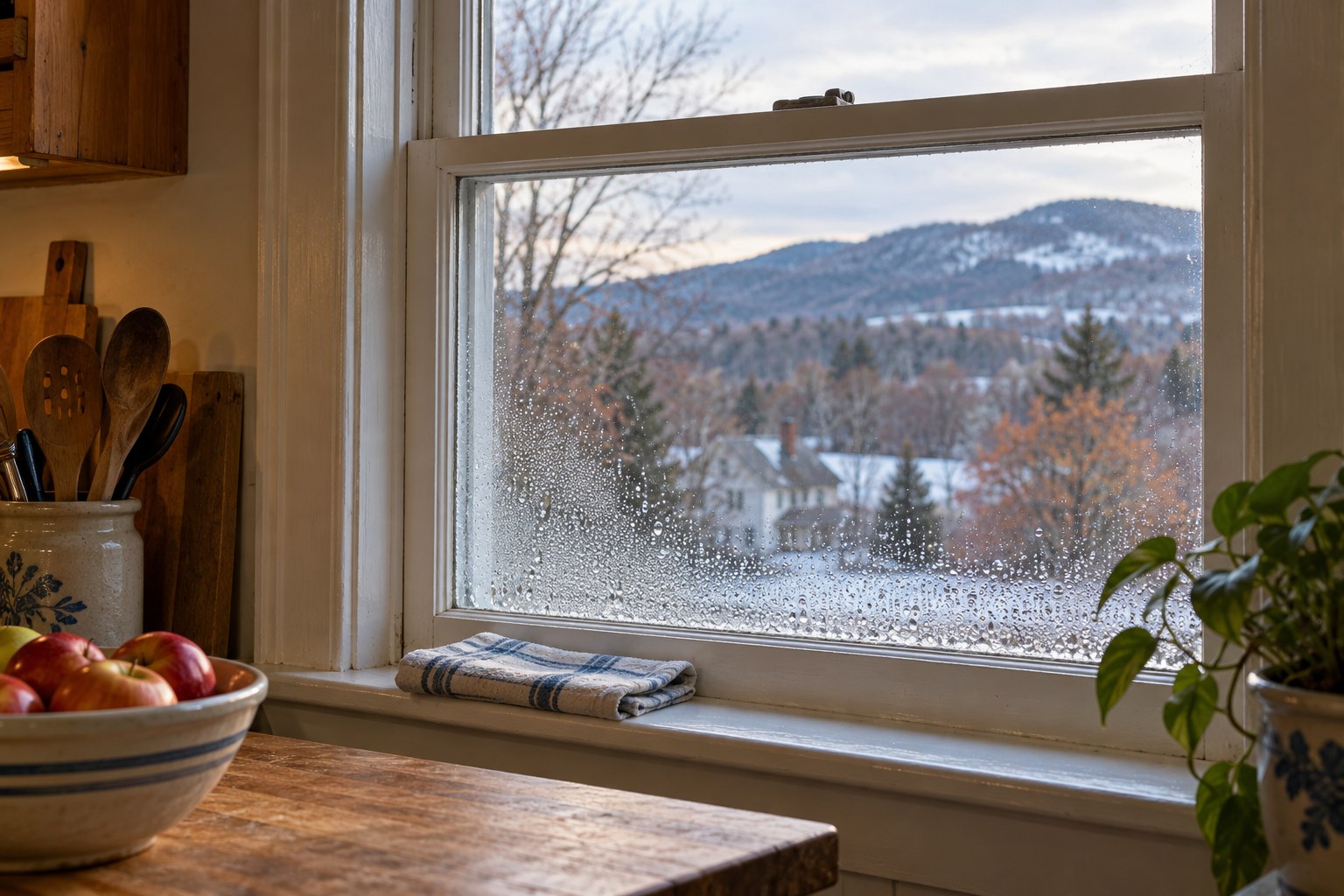
A chilly morning in Montpelier, coffee brewing, and the kitchen window looks like it just ran a marathon. Before blaming the window or cranking the thermostat, find out where that water is sitting. A wet pane is a clue. The useful question is what made it wet—and which fix addresses that cause without sending more money out the door.
Cost: $0 to observe; a room humidity meter is optional
Your practical checklist.
- From a safe indoor position, note whether water is on the room-facing glass, within a sealed glass unit, or associated with a frame or wall leak.
- Dry accessible wet glass and the sill promptly; photograph recurring moisture or damage.
- If you have a humidity meter, record room humidity and temperature according to its instructions, along with outdoor conditions and recent showers or cooking.
- Use existing outdoor-vented exhaust as intended; review humidifier use and keep required ventilation operating.
- Compare a few similar mornings. Ask a landlord or qualified building professional about persistent wetness, damage or uncertain moisture sources.
Start with the side of the glass you can actually wipe.
Water that wipes off the indoor surface is different from fog trapped inside a factory-sealed double-pane unit. The Port of Seattle explains that a failed glass seal can allow moisture between those panes. A humidity change in the room will not repair that seal. Ask a window professional about the glass unit and any warranty before assuming every frame must be replaced.
A separate storm window is a different assembly from sealed insulating glass. Describe what you have rather than applying a sealed-unit diagnosis to every gap between panes. Water arriving at trim during rain, staining above the frame, or a soft sill also deserves investigation as a possible leak. Photograph the location; do not remove trim or drill drainage holes to investigate.
Read humidity as a clue, not a pass-or-fail score.
EPA recommends keeping indoor relative humidity below 60%, ideally 30–50% where possible. That general range does not guarantee dry winter windows. EPA also explains that colder outdoor temperatures can require lower indoor humidity to avoid condensation on cold surfaces. The right response depends on the window, weather and the whole home—not a universal setting copied from a neighbor.
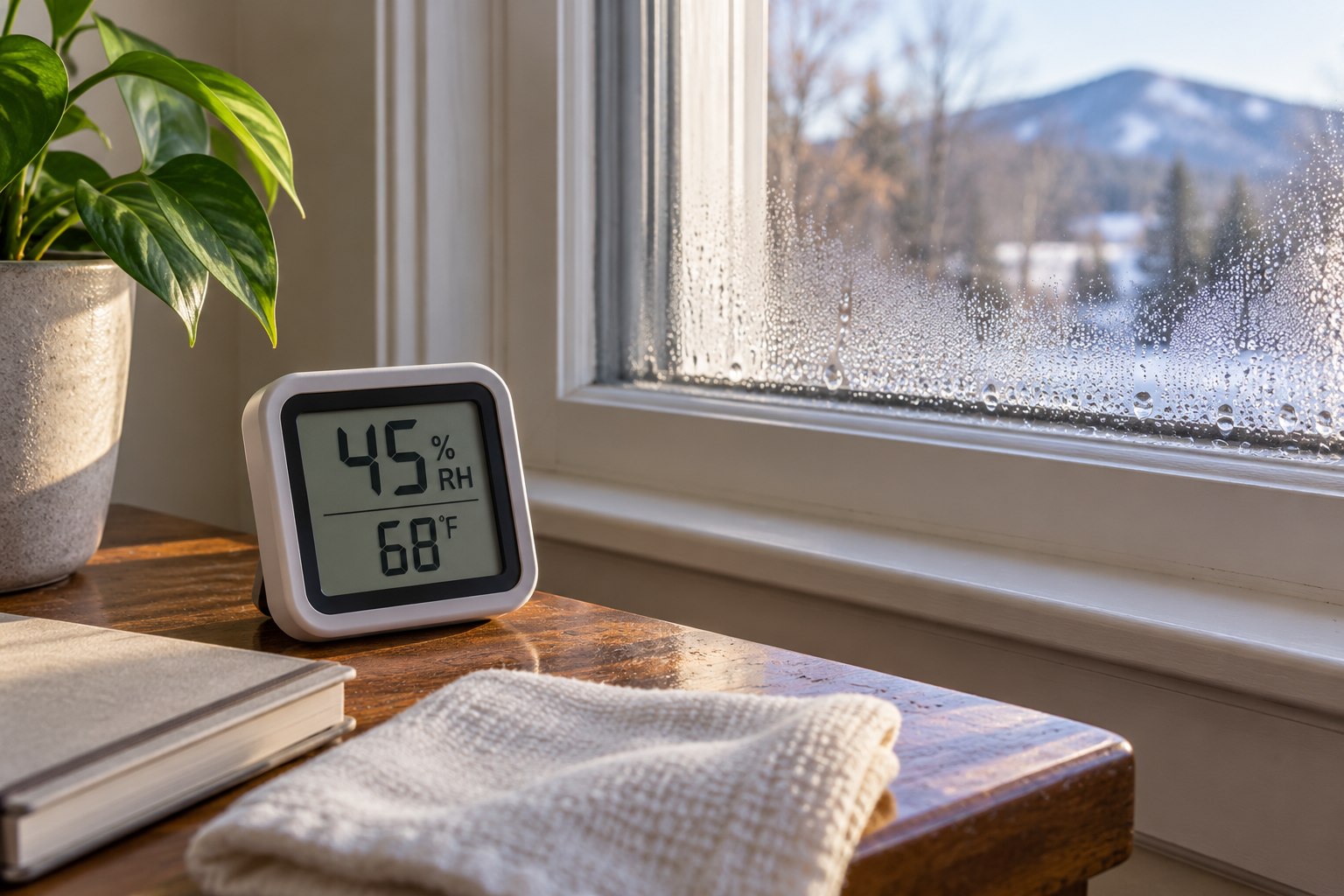
Follow your meter’s placement instructions and avoid treating a reading pressed against cold glass as representative of the room. Record the time, room temperature and conditions with the number. The pictured 45% reading is an illustration, not a measurement from a Vermont home or a recommended target. A single reading cannot establish the cause of recurring wetness.
Follow the moisture before shopping for equipment.
Cooking, showers and indoor clothes drying add moisture. EPA advises exhausting moisture outdoors. Use installed bath and kitchen exhaust according to its instructions; a recirculating range hood is not the same as an outdoor exhaust. If you are unsure where a fan vents, ask maintenance or a qualified contractor instead of entering an attic or changing ductwork.
If you use a humidifier, review its instructions and setting when condensation appears. Keep required mechanical ventilation operating; blocking vents to retain heat can trade one problem for another. PNNL’s cold-weather humidity guidance treats moisture and ventilation together. Any changes to ventilation equipment or its controls need a plan appropriate to your house, including fuel-burning appliances.
Curtains can change the conditions at the pane.
Natural Resources Canada explains that closed drapes, deep sills and nearby furniture can restrict air movement and let cold air collect near the glass. That helps explain why a window behind a tightly closed covering can look different from an exposed one. It does not establish that every damp window has the same cause.
Observe what happens after opening ordinary window coverings during the day, keeping fabric clear of heaters and following equipment clearances. Do not block radiators or ventilation, or sacrifice emergency escape access. ENERGY STAR notes that even efficient windows can develop condensation in cold weather. A purchase decision should follow the findings, not one alarming morning.
Make the service call specific—and protect the sill now.
Here is a useful hypothetical note: “Kitchen lower pane wet on three cold mornings; water wipes off indoors; room humidity and temperature recorded; bath fan used after showers; sill photographed.” Add whether other windows are affected and whether rainfall changes the pattern. These details help someone choose the next inspection instead of guessing from “the windows sweat.”
EPA advises drying condensation promptly and fixing the moisture source. Recurring saturation, visible growth, musty odor or damaged material warrants help appropriate to the problem. Renters should report moisture and leaks promptly to the owner or manager. Do not paint or caulk over suspected mold. For cleanup decisions, use EPA’s guidance or an experienced professional; this observation checklist is not a mold-remediation procedure.
Common questions.
Does condensation mean my windows need replacing?
No. Indoor-surface condensation can involve humidity, cold glass and air circulation. Moisture inside a sealed glass unit is a different problem. Identify the location and cause before requesting a replacement quote.
Is 50% humidity always safe for winter windows?
No. EPA’s general 30–50% range is not a guarantee against condensation. Colder conditions and colder window surfaces may require lower indoor humidity; ask about persistent moisture rather than chasing one number.
Should I turn off ventilation to save heat?
Keep required ventilation operating. Use existing exhaust as intended, and ask a qualified professional before changing ventilation equipment or controls. Moisture management and energy improvements need to work together.
What should a renter tell the landlord?
Report the exact wet location, when it appears, whether it wipes off indoors and any staining or damage. Include photos and available room readings. Request investigation before making permanent alterations.
Sources and fact checks.
Published by The Heatah team. Guidance is linked below; no professional inspection of your home is implied.
- EPA: Moisture sources, outdoor exhaust and cold-weather window humidity · checked 2026-10-29
- EPA: Moisture control, prompt drying and guidance for renters · checked 2026-10-29
- PNNL Building America: Managing indoor humidity and ventilation in cold weather · checked 2026-10-29
- Natural Resources Canada: Condensation and air movement near window coverings · checked 2026-10-29
- ENERGY STAR: Residential windows and cold-weather condensation · checked 2026-10-29
- Port of Seattle: Window glass seal failure · checked 2026-10-29
Original photographic-style editorial illustrations generated for The Log. These images do not depict an actual home inspection, customer property or measured result.